
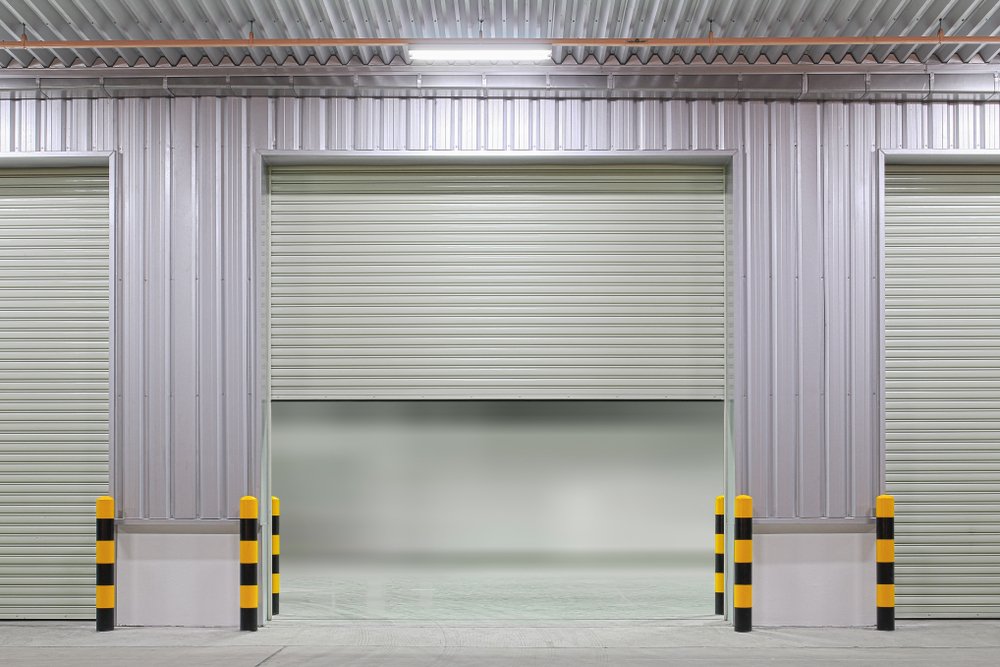
Maintaining automatic doors in factories and commercial buildings comes down to three things: a preventive inspection schedule based on how often each door runs, a safety test at every visit, and fast action at the first sign of a fault before it grows. A door that is maintained regularly lasts longer, is less likely to stop during working hours and, above all, stays safe for staff and vehicles.
This guide covers maintenance for rolling shutters, automatic sliding doors, sectional doors and high-speed doors: what your own team can do safely, what must be left to a trained technician, and how to request service quickly and accurately.
Why preventive maintenance matters
- Safety: safety sensors and the reversing function can weaken or fail without anyone noticing, which puts workers at risk.
- Continuity: a stuck door on a loading bay or between two halls can stop a production line or delay a shipment.
- Longer component life: cleaning, lubrication and adjustment reduce friction, wear and overheating.
- Lower cost: replacing a small part early costs far less than replacing a motor or a whole curtain after the fault grows.
Warning signs that need an inspection now
- Unusual noise: grinding, clicking, squealing or knocking while the door moves.
- The door is slower than before or stops part way.
- Jerky movement, vibration, or a curtain or leaf that sits crooked.
- The door reverses for no reason, or fails to reverse when it meets an obstacle.
- The remote or push button works only some of the time.
- The motor runs very hot or there is a burning smell.
- Damaged slats or panels, or bent guides after an impact.
- On glass doors: leaves knocking into each other or the frame, or the sensor opening the door by itself.
Important: if a door has a safety problem, such as not reversing or coming down unusually fast, stop using it and mark it out of service until a technician checks it.
Suggested preventive maintenance schedule
The number of visits depends on daily cycles and site conditions (dust, humidity, forklift traffic). This table is a guide; the technician adjusts it for each door:
| Task | Light use | Medium use | Heavy use or dusty site |
|---|---|---|---|
| Visual check and track cleaning (site team) | Monthly | Weekly | Daily or weekly |
| Test safety sensors and reversing | Monthly | Monthly | Weekly |
| Visit by a trained technician | About every 6 months | Every 3 to 4 months | Every 1 to 2 months |
| Motor, controller and wiring check | At each technician visit | At each technician visit | At each technician visit |
What your team can do safely
- Cleaning: remove dust and debris from floor guides and side tracks after isolating the power.
- Visual check: look for loose bolts, damaged slats or panels, and exposed cables.
- Safety test: place a light obstacle such as an empty carton in the door's path and confirm the door stops or reverses.
- Sensor test: walk towards the door from different directions and confirm it opens in time.
- Record observations: note any noise, delay or odd behaviour with the date, to help the technician.
What not to do yourself
- Release or adjust the counterbalance springs on sectional doors; they are under high tension and can cause serious injury.
- Open the control unit or work on the mains supply.
- Change the motor's open and close limits without knowing the model.
- Repair dented slats or panels by hammering or welding.
- Run a door after a heavy impact before a technician checks the guides and shaft.
Maintenance points by door type
Rolling shutters
Check the slats and end locks, the cleanliness and alignment of the guides, the barrel and bearings, the anti-fall brake, the bottom safety edge, and the manual override (chain or crank). If the door already has a fault, see rolling shutter door problems in factories and their causes.
Automatic sliding doors
Clean the top track and floor guide, check belt tension and the condition of rollers and carriages, adjust sensor angles, test reversing, check the battery backup if fitted, and inspect brushes and seals.
Sectional doors
Check hinges and rollers, track alignment, door balance (checked by the technician), bottom and side seals, cables and safety sensors.
High-speed doors
Check the flexible curtain and its edges, the side guides, the photocells, opening and closing speeds, and the curtain's ability to re-insert into its guides after an impact on models that have this feature.
Maintenance in Egyptian operating conditions
Dust and sand: in open industrial zones and during khamaseen dust storms, dust gets into guides and rollers and increases friction quickly. Clean more often during these periods and check sensors and their lenses frequently.
Summer heat: a motor working in a hot space without ventilation overheats faster, especially on busy doors. Make sure the motor cover is not blocked and nothing is stored against it.
Humidity and salt: in plants near the coast or with steam and water, rust and corrosion appear sooner on bolts, guides and metal parts. A visual rust check should be part of every visit.
Handling power cuts
Every automatic door needs a clear way to operate during a power cut: a chain or crank on rolling shutters, a manual release on sectional and sliding doors, or a battery backup. Make sure the responsible person on each shift knows the method and that tools such as the crank handle are kept in a known place. When power returns, run the door through a full cycle and watch it before normal traffic resumes.
Quick pre-shift checklist
- The door opens and closes fully without stopping or unusual noise.
- No obstacles or debris in the guides or the door's path.
- The safety sensor stops or reverses the door on an obstacle.
- Warning lights and signals work, if fitted.
- No new visible damage to slats, panels or leaves.
Diagnostic information that helps the technician
- Door type and approximate size, and where it is in the plant.
- Motor or operator brand and model, if shown on the label.
- A precise description of the fault: when it happens, every time or occasionally, after a particular event?
- Photos and a short video of the door moving, and of the motor and control box from outside.
- Any error code or warning light on the control unit.
- The last maintenance visit and what was replaced.
- Any impact or power cut just before the problem appeared.
Maintenance contract or on-call service?
If you have several doors, or doors in critical positions such as loading bays and production lines, a preventive maintenance contract is usually more economical and safer: scheduled visits, a record for each door and priority response to faults. For a single, lightly used door, on-call service with a periodic check may be enough. In both cases, ask about response times and spare parts availability.
Common mistakes with automatic doors
- Greasing guides with heavy grease that traps dust and increases friction.
- Disabling a safety sensor because it "reverses too often" instead of having it adjusted.
- Running a door that makes a strange noise until it stops completely.
- Using a technician who is not familiar with the door model.
- Not training staff on the manual release for emergencies.
Emergency exit doors need their own checks (panic bar, closer and a clear route); see our guide to emergency exit doors in factories.
Frequently asked questions about automatic door maintenance
How often does an automatic door need maintenance?
It depends on daily cycles and site conditions. Heavily used doors or doors in dusty areas need far more visits than a door opened twice a day. The technician sets the schedule after the first inspection.
The door reverses by itself. What should I do?
Clean the photocell lenses and make sure nothing is in the door's path. If the problem continues, request an inspection; the sensor may need adjustment, or there may be a wiring or limit-setting issue.
Can I lubricate the door guides myself?
It is better to clean the guides only and leave lubrication to the technician, because some guides need no lubrication at all, and the wrong grease collects dust and does more harm than good.
What affects the life of a door motor?
Whether the motor is correctly sized for the door weight, the number of daily cycles, clean guides, a well-balanced door and a stable power supply. Any friction or imbalance makes the motor work harder.
Do you service doors you did not install?
Send the door type, motor model and photos through the after-sales page, and our team will review them and confirm whether we can service the door.
Have a door that needs checking? Request service through our after-sales and maintenance page with the details and photos. If you are planning a new door, read our industrial door comparison or contact us.