
In short: a rolling shutter is the economical choice for security on openings with light to moderate traffic; a sectional door is best when you need insulation, a tight seal and a clean finish; and a high-speed door is the answer when an opening cycles dozens or hundreds of times a day between halls or departments. The right choice depends on traffic, insulation needs, the space above the opening and the level of security required.
This article compares rolling shutter doors, sectional doors and high-speed PVC doors from the point of view of a factory owner or warehouse manager in Egypt: which suits which use, and which mistakes turn a door into a problem instead of a solution.
Comparison table: industrial door types
| Criterion | Rolling shutter | Sectional | High-speed |
|---|---|---|---|
| How it opens | Slats roll onto a barrel above the opening | Panels travel up on tracks to sit under the ceiling | A flexible curtain (PVC or similar) rolls or folds quickly |
| Opening speed | Moderate to slow | Moderate | Very fast |
| Thermal insulation | Limited, unless insulated slats are used | Good, thanks to insulated panels and seals | Moderate; its benefit is the short time it stays open |
| Security against break-in | High | High | Lower; usually internal or paired with a security door |
| Space needed | Room for the coil above the opening | Ceiling space for the panel tracks | Small space above and side frames for the guides |
| Suitability for frequent cycles | Limited | Moderate | Built for intensive use |
| Typical use | Stores, shops, external openings | Loading bays, warehouses, workshops, garages | Between halls, cold rooms, production lines |
When to choose a rolling shutter
A rolling shutter suits openings where security at a reasonable cost is the priority and the door does not open often during the day: a store opened in the morning and closed at night, an external factory opening that must be locked after hours, or a shop front. Its big advantage is that it needs little space, because the slats roll into a coil above the opening and no ceiling tracks are required.
Know its limits: standard slats insulate poorly, opening is relatively slow, and very frequent cycling wears the motor. To understand its cost factors, read rolling shutter door prices in Egypt.
When to choose a sectional door
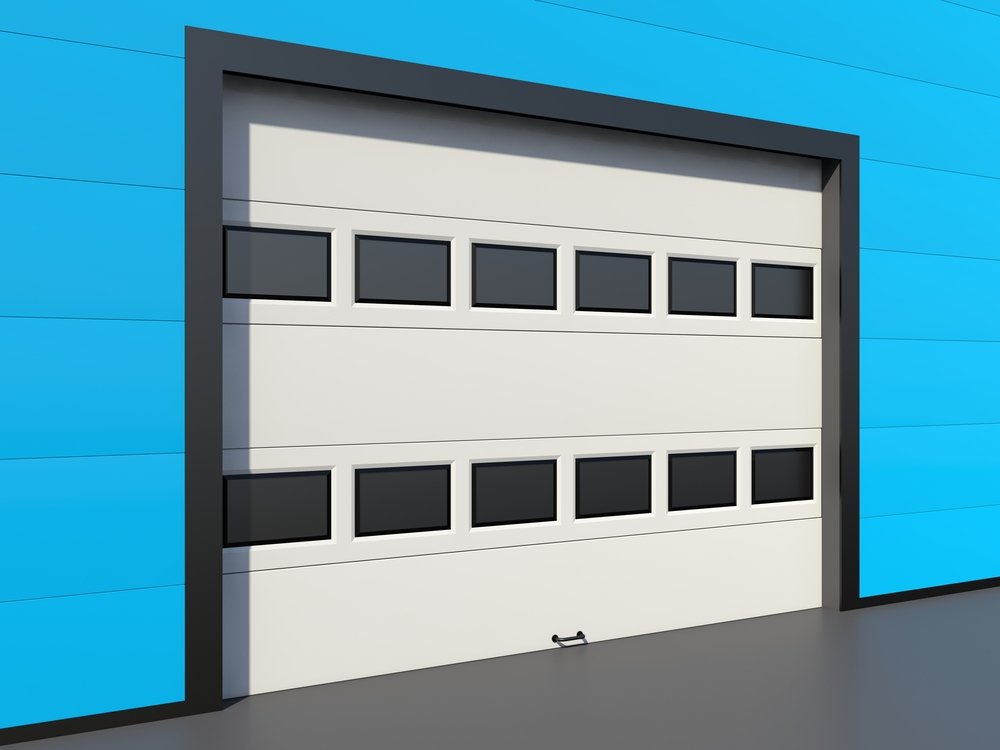
A sectional door is made of horizontal insulated panels joined by hinges. It travels up on side tracks until it lies parallel to the ceiling. This gives two advantages: a tighter seal and better insulation thanks to filled panels and perimeter seals, and a clean appearance that suits modern factories and warehouses.
Sectional doors are an excellent choice for loading bays (especially with dock levellers and shelters), stores holding goods sensitive to heat or dust, workshops and garages. They need enough ceiling space for the panel tracks. Obstacles above the opening such as pipes, beams or an overhead crane must be identified during the survey, as they may call for a different lift type.
When a high-speed door is the right fit
High-speed doors are designed for openings with constant traffic: forklifts going in and out all day, staff moving between two departments, or a cold room that must close immediately after each passage. The high speed cuts the time the opening stays open, which reduces heat or cold loss and the entry of dust and insects, and keeps traffic flowing.
The curtain on most models is flexible, so a light impact from a forklift usually does less damage than it would to a rigid door, and some models can re-insert the curtain into its guides after an impact. High-speed doors are usually fitted on internal openings, or together with a second door that provides security at night.
Factors to assess before deciding
1. Cycles per day
This is the key question. Estimate how many times an hour the door opens at peak time. If the number is small, a rolling or sectional door is suitable. If it is high and continuous, a high-speed door will usually save time and energy and reduce breakdowns.
2. Temperature difference and insulation
If the space is air-conditioned or refrigerated, or holds heat-sensitive goods, insulation becomes a priority. An insulated sectional door seals well; a high-speed door cuts opening time. You can also add an industrial air curtain to openings that stay open for long periods.
3. Security
External openings that are locked at night need a rigid door such as a rolling shutter or sectional door. Many factories use both: a high-speed door for daily operation and a rolling or sectional door for locking up after hours.
4. Space above the opening and in the ceiling
Measure the distance from the top of the opening to the ceiling and note obstacles such as beams, pipes, ducts, lighting and overhead cranes. These can rule out one type and favour another.
5. Environment
Strong wind in open industrial zones, dust, humidity and salt near the coast all affect the choice of materials, finishes and guide type.
6. Maintenance and spare parts
Each type has different maintenance needs, and heavily used doors need closer follow-up. Always ask about spare parts availability in Egypt and response times. See our automatic door maintenance guide.
If the door is for a cold room or a ripening room in a food factory, the choice changes because insulation and sealing matter more; see Cold Room and Ripening Room Doors: Sectional, Roller or High-Speed?
Practical scenarios from factories and warehouses
- Raw materials store opened two or three times a day: a rolling shutter with suitable slats and a motor is usually enough.
- Loading bay at a distribution company: an insulated sectional door with the right dock equipment.
- Opening between production and packing with forklifts all day: a high-speed door.
- Cold room or air-conditioned store: a high-speed door or an insulated sectional door, depending on traffic.
- Large external opening in an exposed industrial zone: a sectional door or a heavy-duty rolling shutter with wind-rated guides, possibly with an internal high-speed door for daily use.
Total cost, not just purchase price
When comparing the three types, think about cost over the years of operation, not on the day of purchase. Total cost includes the door and its installation, the energy lost through the opening, production time lost when the door breaks down, and the cost of maintenance and spare parts. A door with a higher price that keeps the opening closed most of the time and tolerates intensive use can end up cheaper than a low-cost door that keeps failing on a busy opening.
Safety requirements for industrial doors
Every motorised industrial door needs protection for people and equipment: a safety edge at the bottom that stops or reverses the door when it meets an obstacle, photocells at the opening, a brake or anti-drop device on heavy doors, and a manual release for emergencies. Staff and drivers should also be shown how to use the door, and the emergency stop should be clearly marked.
Common mistakes when choosing a factory door
- Choosing on purchase price alone: a cheap door on a busy opening can stop often and cost production time.
- Ignoring headroom: discovering after ordering that a beam or crane blocks a sectional door's tracks.
- Leaving out safety devices: sensors and safety edges are essential where workers and forklifts pass.
- Not planning for power cuts: there must be a manual release or a backup solution.
- Expecting one door to do everything: sometimes the best answer is two doors on one opening, one for operation and one for security.
Checklist before you decide
- How many times an hour does the door open at peak time?
- Is the opening external, or between two areas inside the plant?
- Is the space air-conditioned, refrigerated or sensitive to dust?
- How much space is there above the opening and in the ceiling?
- Does the opening need to be secured after working hours?
- Who passes through: people, forklifts, trucks?
- What power supply and control system are available or required?
Send your answers with measurements and photos through the site survey request page, and our team will recommend the right type or a combination of types.
Frequently asked questions about industrial door types
What is the main difference between a rolling shutter and a sectional door?
A rolling shutter coils onto a barrel above the opening and needs little space. A sectional door is made of insulated panels that travel up tracks to the ceiling, giving better insulation and sealing but needing ceiling space.
Can a high-speed door be used as an external door?
Some models can, in suitable conditions, but they are usually fitted internally or together with a security door, because a flexible curtain is not mainly designed to stop break-ins and strong wind needs a wind-rated model.
Which type is best for cold rooms?
It depends on traffic. With heavy traffic, a high-speed door cuts opening time. With light traffic where insulation matters most, an insulated sectional door or a dedicated cold room door is better.
Can I fit two types of door on one opening?
Yes, this is common: a high-speed door for daily operation and a rolling or sectional door for secure locking after hours, as long as there is enough space.
How do I know how much space each type needs?
It varies with the opening size and the model. The easiest way is to send the measurements, the distance to the ceiling and photos of any obstacles; a site survey then confirms the right solution.
Not sure which type fits? Browse our automatic and industrial doors or request a site survey for your facility.